What Is the Anion Gap?
The anion gap is a calculated value used in laboratory testing to help evaluate acid-base balance. It comes from a routine electrolyte panel and compares the major measured cations and anions in the blood. In clinical practice, it is usually estimated from serum sodium minus serum chloride and serum bicarbonate. Because not every charged particle is directly measured, the anion gap helps clinicians identify the presence of other ions that are not part of the standard lab report.
The key idea is that the body contains both measured and unmeasured ions. When the gap changes, it may signal a change in the balance of acids, bases, and electrically active particles. That is why an unexpected https://anion-gap-reader194.cavandoragh.org/what-is-the-anticipated-anion-gap-with-normal-albumin result on routine laboratory values can be a clue to a underlying metabolic derangement. The anion gap is not a diagnosis by itself, but it is an important part of interpretation during patient evaluation.
In many settings, the anion gap supports the assessment of metabolic acidosis. A normal or elevated result may point toward different causes, and a low result can also be meaningful. Because the number depends on several laboratory values, the reference range can vary by method, analyzer, and clinical context. That is one reason a careful reading of the full blood chemistry panel matters rather than relying on the calculated value alone.
Why albumin Is Important in acid-base Analysis
albumin is the most abundant protein in plasma and one of the key plasma proteins in acid base physiology. It carries a net negative charge at physiologic pH, so it behaves as one of the major anionic proteins in circulation. Because of that protein charge, albumin adds to the pool of unmeasured anions that shape the anion gap.
This matters because the body’s acid-base balance is influenced not only by bicarbonate, chloride, and sodium, but also by protein and mineral ions that are not always included in a basic panel. When albumin falls, the total number of negatively charged particles in plasma falls too. That shifts the measured relationship between cations and anions and can make the anion gap appear reduced than expected.
For clinical interpretation, albumin is therefore not just a nutritional marker. It is part of the chemistry that shapes the calculated value used during a workup for acid-base disturbances. If serum albumin is low, the anion gap may miss the presence of acids in the blood. This is especially important when the clinical picture suggests acidosis but the reported value seems normal.
How Hypoalbuminemia Reduces the Anion Gap
Low albumin lowers the anion gap because albumin is a primary contributor to the pool of unmeasured negative ions. When serum albumin falls, less negatively charged proteins are present to counteract the positively charged ions measured in the blood. As a result, the calculated anion gap decreases, even if the underlying acid-base problem has not changed.
That is why a low or normal anion gap can be deceptive in a patient with low albumin. The body may still have extra acid present, but the lower albumin concentration “subtracts” from the gap. In other words, hypoalbuminemia can create an falsely reassuring result. The corrected anion gap is designed to address this by estimating what the value would be if albumin were normal.
The physiologic relationship is clear: less albumin means less negative charge, which means fewer unmeasured anions contributing to the gap. That can reduce diagnostic accuracy if albumin is ignored. For that reason, low serum albumin should always prompt a more careful interpretation of the laboratory values, especially when symptoms or other findings suggest metabolic acidosis.
How to Adjust the Anion Gap for Reduced Albumin
In the presence of low albumin, clinicians use an albumin correction formula, also called an correction for albumin. The precise correction factor may vary slightly by source, but a common approach is to add a set amount to the anion gap for every 1 g/dL decrease in serum albumin below normal. The corrected anion gap is then compared with the usual reference range for more accurate interpretation.
A widely used adjustment formula is:
Corrected anion gap = measured anion gap + 2.5 × (4.0 - serum albumin in g/dL)
This calculation helps account for the loss of negatively charged proteins. Because some calculators use different constants, it is important to know the method being used and to read the result in context. The adjustment is expressed in milliequivalents/L, the same unit used for the anion gap itself.
An anion gap calculator can speed up this process and lower the chance of error, especially when multiple laboratory values must be reviewed quickly. Entering the calculator input values accurately matters: serum sodium, serum chloride, serum bicarbonate, and serum albumin all affect the result. The calculator provides a calculated value, but the final clinical interpretation still depends on the patient’s overall presentation and other blood chemistry findings.
Clinical Situations When a Normal Anion Gap May Be Misleading
A typical anion gap does not always mean acid base balance is within range. In metabolic acidosis, the gap can persist within the reference range if bicarbonate loss is balanced by a rise in chloride, as in non-anion gap acidosis. But a normal result can also occur when hypoalbuminemia is hiding a high-gap process.
This is particularly important in lactic acidosis, ketoacidosis, and renal failure. Each of these conditions can increase unmeasured acids, raising the anion gap. However, if albumin is low, the measured number may not go up as much as expected. In that situation, a patient can have a significant metabolic disturbance even though the standard report seems less concerning than it should.
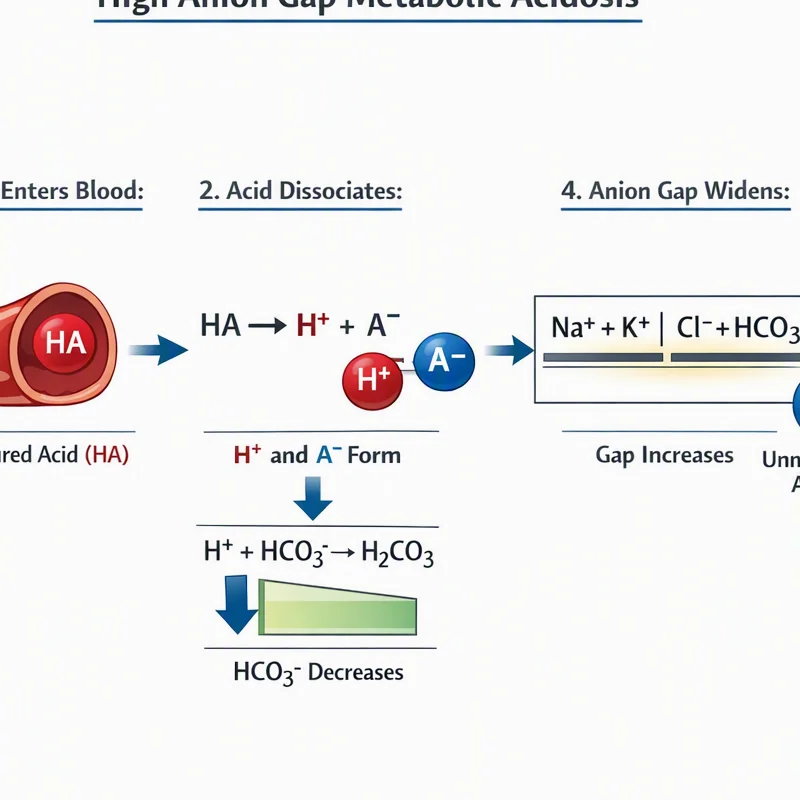
For example, in high anion gap metabolic acidosis, the true acid load may be obscured by low serum albumin. That is why clinicians should take into account albumin whenever the clinical assessment and the laboratory values do not match. An unexpected result should lead to a closer review of the electrolyte panel and the larger diagnostic picture.
When to Detect a Hidden High Anion Gap Acidosis
A masked acid buildup should be considered when the clinical picture indicates acid accumulation but the reported anion gap appears normal or only slightly elevated. This is especially relevant in critical illness, where multiple processes can affect blood chemistry at the same time. Infection, shock, poor perfusion, kidney dysfunction, and nutritional deficits may all influence albumin and acid production.
One useful clue is the presence of a combined acid-base disturbance. A patient may have both metabolic acidosis and another process, such as respiratory alkalosis or metabolic alkalosis, which can make the overall picture harder to read. In those cases, the anion gap may not tell the full story unless it is corrected for albumin and considered alongside the delta gap.
The gap comparison helps assess the rise in the anion gap with the fall in bicarbonate. If those changes do not match, a mixed disorder may be present. This is why an unexpected laboratory pattern in critical illness should prompt further assessment rather than reassurance from a single calculated value. Correcting for serum albumin can reveal a hidden high-gap process that otherwise might be overlooked.
Drawbacks of Anion Gap Interpretation
While useful, the anion gap has constraints. One concern is lab variation, since different analyzers and methods may yield slightly different results. That means the normal range is not universal. A value considered normal in one setting may be marginal in another, which can affect interpretation.
Other measured ions also influence the result. Changes in ionized calcium, magnesium, and phosphate can change the balance of charges in plasma and affect the apparent gap. These factors matter because the gap is a computed estimate, not a direct measurement of acid load. A patient with abnormal mineral levels may show a result that is more difficult to read without a fuller clinical assessment.
In addition, low albumin may coexist with multiple sources of acid or base disturbance. That means the corrected anion gap enhances diagnostic accuracy, but it still does not replace clinical judgment. It should be viewed as one part of the broader patient evaluation, alongside symptoms, medications, renal function, perfusion status, and the overall pattern of laboratory values.
In what way an Anion Gap Calculator Aids in Use
An anion gap calculator is useful because it streamlines the math and helps prevent oversight during busy clinical work. By entering the calculator input values—especially serum sodium, serum chloride, and serum bicarbonate—you can promptly obtain the usual anion gap. If albumin is also included, the tool can determine the corrected anion gap and enhance interpretation.
This is especially valuable when reviewing an electrolyte panel with an unexpected result. A calculator helps clinicians compare the uncorrected and corrected numbers side by side, making it more straightforward to decide whether further evaluation for high-gap acidosis is needed. It also decreases the chance of arithmetic error when bedside decision-making is time-sensitive.
In practice, the best use of a calculator is not merely to get a number, but to guide clinical reasoning. The output should be used together with serum albumin, the rest of the blood chemistry, and the patient’s symptoms. That approach enhances patient safety by lowering the risk of missing a masked high anion gap metabolic acidosis.
Questions and Answers About Hypoalbuminemia and Anion Gap
How come does low albumin lower the anion gap?
Low albumin lowers the anion gap because albumin is a key negatively charged protein in plasma. When serum albumin drops, there are less unmeasured anions contributing to the gap, so the calculated value decreases. This can make the anion gap look normal even when acid-base balance is disturbed.
How do you correct the anion gap for hypoalbuminemia?
You can use an albumin correction formula that includes a correction factor for each gram per deciliter that serum albumin is below normal. A common version is corrected anion gap = measured anion gap + 2.5 × (4.0 - serum albumin). This adjustment supports interpretation when hypoalbuminemia is present.
Can hypoalbuminemia hide a high anion gap acidosis?
Yes. Hypoalbuminemia can cause hidden acidosis by lowering the measured anion gap even when unmeasured acids are present. This can mask high anion gap metabolic acidosis from lactic acidosis, ketoacidosis, or renal failure unless the gap is corrected for albumin.
What albumin level significantly affects the anion gap?
There is not a single threshold that fits every patient, but any albumin measurement below the usual reference range can affect the anion gap. With lower serum albumin, the greater the effect on interpretation. Even slight hypoalbuminemia may matter if clinical suspicion for metabolic acidosis is high.
Should an anion gap calculator always be adjusted for albumin?
Not always, but albumin adjustment is often valuable when albumin is low or when the clinical picture does not match the uncorrected result. In critical illness, mixed acid-base disturbance, or suspected high anion gap metabolic acidosis, using albumin correction supports clinical interpretation and diagnostic accuracy.